



Table of contents
- An overview of the three CBD types ›
- Full Spectrum CBD: The complete plant profile ›
- CBD Isolate: Pure cannabidiol ›
- Broad Spectrum CBD: The middle ground ›
- Decision help: Which type suits whom? ›
- Quality criteria – regardless of type ›
- A common misconception: More CBD = better effects? ›
- Conclusion ›
Full spectrum, broad spectrum, isolate – you'll find these terms on most CBD products, and they describe which ingredients are present alongside CBD. The differences aren't just about wording: they directly affect the active compound profile, taste, and the potential effects of a product. This article explains the three types in detail and helps you choose the right one for your needs.
An overview of the three CBD types
| Characteristic | Full Spectrum | Broad Spectrum | Isolate |
|---|---|---|---|
| CBD | Yes | Yes | Yes |
| Other cannabinoids (CBG, CBN, CBC) | Yes | Yes | No |
| Terpenes and flavonoids | Yes | Yes | No |
| THC | Yes (under 0.3%) | No (specifically removed) | No |
| Entourage effect | Complete | Partial | Not present |
| Taste | Intense, earthy-herbal | Medium | Mild to neutral |
| Purity level CBD | Varies (depending on extract) | Varies | 99% + |
Full Spectrum CBD: The complete plant profile
Full Spectrum CBD contains the entire natural active compound profile of the hemp plant. Alongside CBD, there are also other cannabinoids present in small amounts:
- CBG (Cannabigerol): Often called the "mother cannabinoid" because it's the precursor to many other cannabinoids. CBG is increasingly being studied on its own.
- CBN (Cannabinol): Forms naturally as THC ages. CBN is associated with calming properties, which is why it's especially valued in evening products.
- CBC (Cannabichromene): One of the lesser-known but still interesting cannabinoids with its own research interest.
- THC in trace amounts: Below the legal limit of 0.3% – not enough for a psychoactive effects, but still detectable.
Full Spectrum CBD also contains terpenes – aromatic compounds responsible for the characteristic scent and taste of the hemp plant – as well as flavonoids, plant pigments with their own biological properties.
The entourage effect: More than the sum of its parts
The main argument for Full Spectrum CBD is the so-called entourage effect. The idea is that the different compounds in the hemp plant don't work in isolation, but rather complement and enhance each other. Certain terpenes, for example, might improve the absorption of CBD, while other cannabinoids contribute their own effects to improve the overall result.
The scientific basis for this concept was provided by a widely cited paper by Dr. Ethan Russo from 2011, published in the "British Journal of Pharmacology." Russo argues that cannabinoids and terpenes can act synergistically – meaning they can have a stronger effect together than each compound alone.
Research on the entourage effect is still ongoing, and not all scientists fully agree with Russo's assessment. However, there is growing evidence that full spectrum extracts can be more effective in certain scenarios than isolated CBD.
CBD Isolate: Pure cannabidiol
CBD isolate is the purest available form of cannabidiol – typically with a purity level of 99% or higher. During production, all other plant compounds are specifically removed: no other cannabinoids, no terpenes, no flavonoids, no THC. What remains is CBD in its most concentrated form, usually as a white, crystalline powder that is then dissolved in carrier oils or used in other products.
Advantages of CBD isolate
- Guaranteed THC-free: Not even trace amounts of THC are present. This is especially important for people who are regularly drug tested, or for anyone who wants to avoid THC completely.
- Mild taste: Isolate-based products taste much more neutral than full spectrum oils. The typical earthy hemp flavor is largely absent, which is a clear advantage for those sensitive to taste.
- Maximum dosage control: Since there are no variable accompanying compounds, you know exactly down to the milligram how much CBD you're taking.
Disadvantages of CBD isolate
- No entourage effect: Without accompanying cannabinoids and terpenes, the potential synergy between plant compounds is missing.
- Possibly less effective: Some studies suggest that isolate, at the same CBD amount, does not deliver the same results as full spectrum extracts. A frequently cited study by Gallily et al. (2015) showed that full spectrum CBD had a broader effect curve in a mouse model than pure CBD.
Broad Spectrum CBD: The middle ground
Broad Spectrum CBD positions itself between full spectrum and isolate. Like full spectrum, it contains a range of cannabinoids and terpenes, but the THC has been specifically filtered out in an extra processing step.
The advantage: You benefit from a partial entourage effect thanks to the accompanying compounds, without having any THC in the product – not even in trace amounts. For many users, broad spectrum is the ideal balance.
- Full spectrum = complete plant profile, maximum entourage effect, minimal THC traces
- Broad spectrum = plant profile without THC, partial entourage effect
- Isolate = pure CBD, no THC, no entourage effect, neutral taste
Decision help: Which type suits whom?
| Situation / Need | Recommendation | Reason |
|---|---|---|
| Maximum effects desired | Full spectrum | Entourage effect thanks to full plant profile |
| Regular drug testing | Isolate or broad spectrum | Guaranteed no THC in the product |
| Sensitive to taste | Isolate | Mildest taste profile |
| THC-free, but with accompanying substances | Broad spectrum | Best compromise between effects and THC-free |
| Evening use / relaxation | Full spectrum | Contains CBN, which is attributed with calming properties |
| First-time users, unsure | Full spectrum (low dose) | Widest active ingredient profile, most proven product form |
Quality criteria – regardless of type
No matter which type you choose: The quality of the product is at least as important as the question of full spectrum vs. isolate. Look for the following features:
- Independent lab analyses: A current certificate from a third-party lab shows the actual CBD content, THC content, the profile of other cannabinoids, and whether any contaminants (pesticides, heavy metals, solvent residues) are present.
- CO2 extraction: Considered the gentlest and cleanest extraction method. It preserves the plant’s active profile and leaves no problematic residues.
- EU-certified industrial hemp: Hemp from controlled European cultivation guarantees compliance with strict quality and safety standards.
- Transparent product declaration: All ingredients, origin, and extraction method should be clearly communicated.
A common misconception: More CBD = better effects?
Not necessarily. The effectiveness of a CBD product does not depend solely on the CBD concentration. With full spectrum products, a lower CBD concentration can be just as effective—or even more effective—thanks to the entourage effect, compared to a higher dose of pure isolate. The composition of the total extract is at least as relevant as the pure amount of CBD.
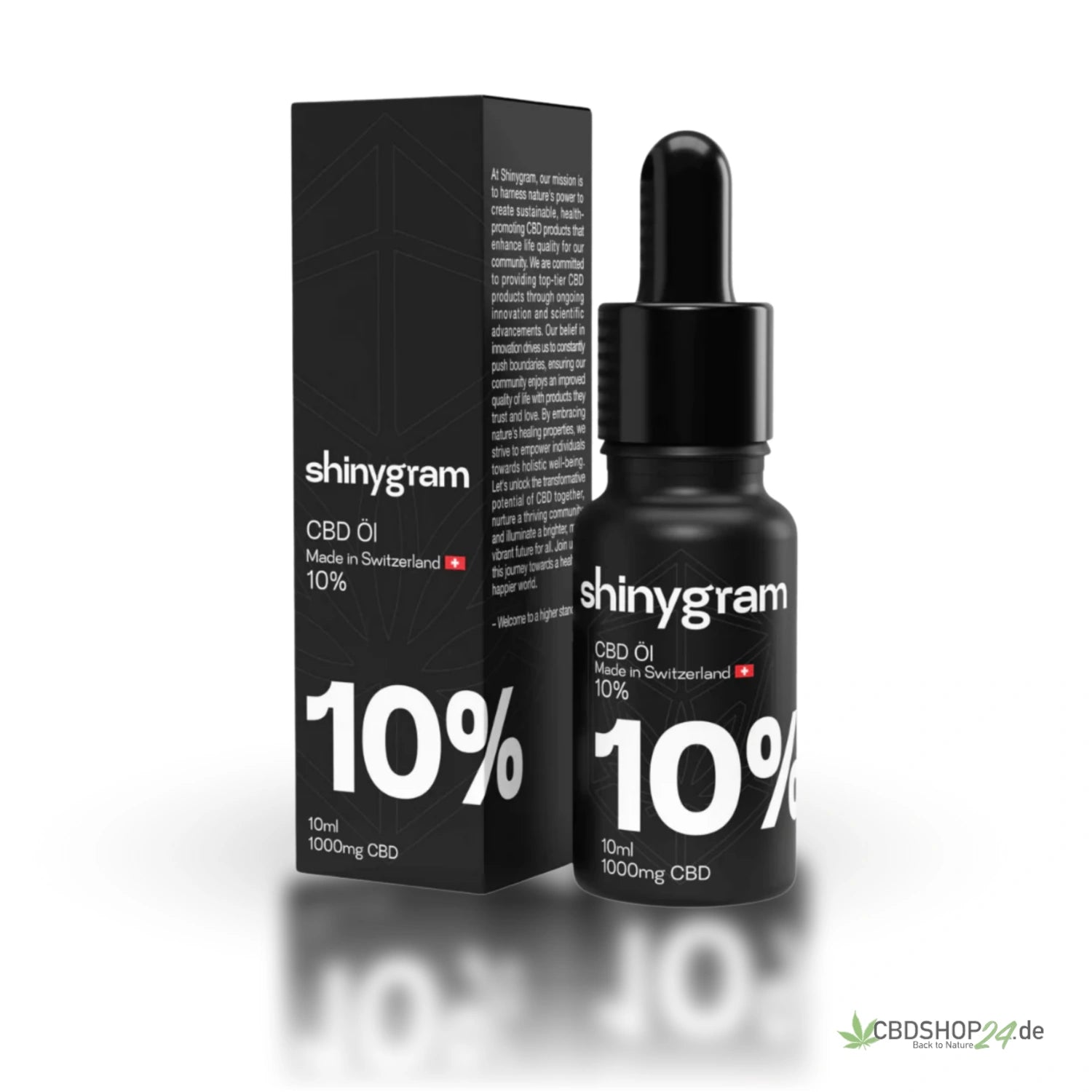
This also means: A 10% full spectrum oil and a 10% isolate oil can have different effects, even with the same CBD concentration. The full spectrum extract brings additional active substances that can influence the overall effect.
Conclusion
None of the three CBD types is generally better than the others—each has its place and its specific strengths. Full spectrum offers the broadest active profile and the strongest entourage effect. Isolate stands out for its purity, THC-free nature, and neutral taste. Broad spectrum provides a thoughtful compromise for those who want accompanying substances but wish to avoid THC.
If you’re unsure, it’s best to start with a full spectrum CBD oil in a low concentration—it’s the best-selling type and offers the most comprehensive plant profile. If you need to avoid THC, isolate or broad spectrum is the right choice.
If you have questions about choosing, we’re happy to advise you.